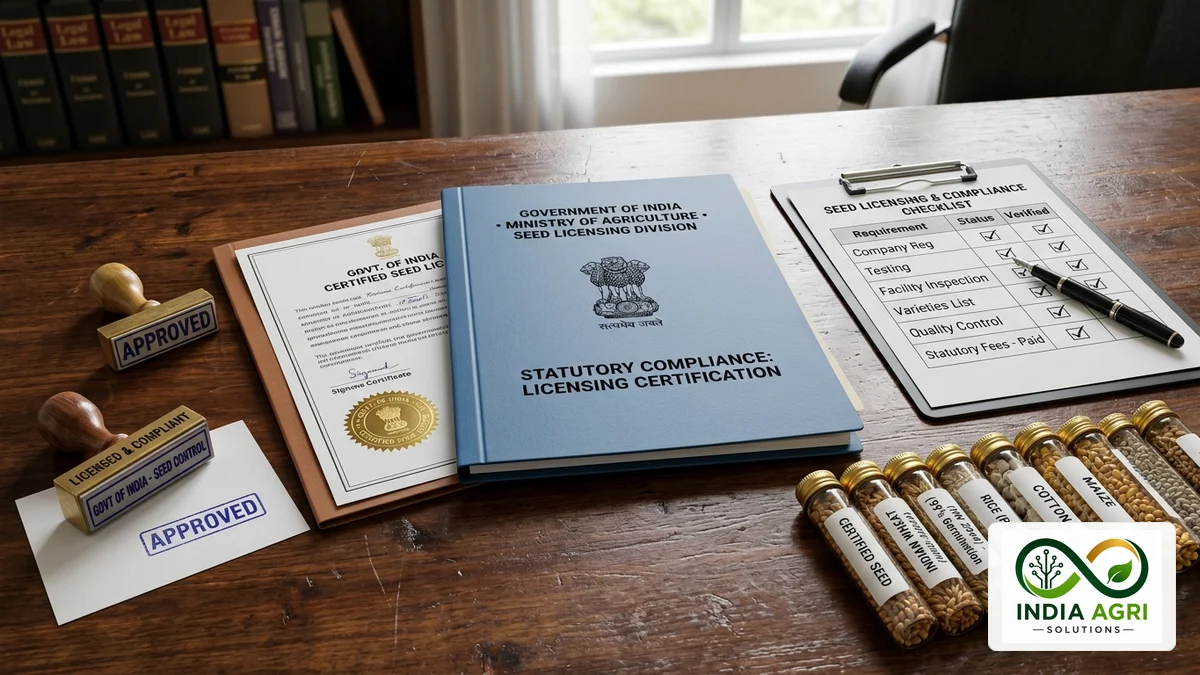
Evolution of Indian Seed Regulations
The Seeds Act, 1966 was enacted nearly six decades ago to regulate the quality of certain notified seeds for sale and distribution across India. While it provided the structural foundation for India's Green Revolution, modern seed science�including hybrid breeding, biotechnology, digital supply chain tracking, and plant variety protection�requires an updated regulatory architecture. This article provides a comprehensive clause-by-clause comparison between the enacted Seeds Act, 1966 and the Proposed Seed Act Amendments (often referred to in legislative discussions as Seed Act 2026 / Draft Seed Bill).
Detailed Clause-by-Clause Comparison
| Feature | Seeds Act 1966 (Active Enacted Law) | Proposed Seed Reforms (Draft Legislation) |
|---|---|---|
| Scope of Regulation | Applies primarily to "Notified Varieties" declared by the Central Seed Committee. | Proposed coverage of all commercial seed kinds and varieties sold in the market. |
| Seed Registration | Voluntary certification through State Seed Certification Agencies. Truthful labeling permitted. | Mandatory registration of all seed varieties based on multi-location VCU trial data. |
| Transgenic & Biotech Seeds | Regulated separately under Environment Protection Act 1986 (GEAC rules). | Proposed alignment between GEAC environmental clearance and seed registration dossiers. |
| Dispute & Compensation | Handled via Consumer Protection Courts or civil suit litigation. | Proposed statutory Seed Compensation Forum at district level for rapid resolution. |
| Penal Provisions | Fines up to ?500 for first offence under Sec 19 of Seeds Act 1966. | Substantially escalated financial penalties and suspension of commercial licenses. |
Impact on Hybrid Seed Manufacturers & Breeders
If enacted in its proposed form, the revised seed legislation will transform agribusiness operations in four key dimensions:
- R&D Documentation Standards: Seed companies will need robust multi-location trial data (SAU / ICAR trials) prior to commercial launch.
- Supply Chain Transparency: Every batch must be cataloged with GTIN barcodes and mapped to the SATHI portal.
- Quality Assurance Facilities: Mandatory access to accredited Seed Testing Laboratories (STL) for germination, physical purity, and moisture analysis.
- Contract Farming Compliance: Formalized organizer-grower agreements under state agricultural guidelines.
Need Compliance Review for Your Seed Enterprise?
India Agri Solutions provides statutory licensing, R&D readiness assessments, and regulatory filing support for seed businesses across India.
Schedule a Regulatory ReviewFrequently Asked Questions
Which law governs seed licensing in India right now?
Seed licensing is governed by the Seed (Control) Order, 1983 issued under Section 3 of the Essential Commodities Act, 1955, in conjunction with the Seeds Act, 1966.
Can seed companies still market Truthfully Labeled (TL) seeds?
Yes. Under the Seeds Act 1966, seed companies can market Truthfully Labeled seeds provided the label accurately states physical purity, germination percentage, and inert matter content in compliance with statutory minimum limits.
Reviewed by India Agri Solutions Regulatory Panel
Senior Agricultural Regulatory Specialists & Agribusiness Consultants
Our advisory team consists of agricultural technocrats, seed production auditors, and regulatory consultants providing advisory services to seed companies, R&D units, and agribusinesses across India.